
Cohen's conservatism and valuing the valuable

What is conservatism? In an oft-quoted passage from ‘On Being Conservative’, the British political philosopher Michael Oakeshott writes:
To be conservative, then, is to prefer the familiar to the unknown, to prefer the tried to the untried, fact to mystery, the actual to the possible, the limited to the unbounded, the near to the distant, the sufficient to the superabundant, the convenient to the perfect, present laughter to utopian bliss.
A number of species of conservatism are jumbled together here, and a person might coherently subscribe to some while rejecting others.
One stems from an aversion to risk. You might prefer the familiar to the unknown because, although you think the probability that the unknown will be better than the familiar to a certain extent is roughly the same as the probability it will be worse to that same extent, and so in expectation you judge them roughly equal, you don’t set your preferences by expectations but by giving greater weight to worse-case scenarios and less weight to best-case scenarios than expectations requires you to.1 Decision theorists have furnished us with many ways in which you might spell this out formally, but it’s easy to see informally how aversion to risk leads to a preference for the ways things are when the value of the way things are is certain while the value of an alternative is as yet uncertain. Such risk-averse individuals will prefer the familiar to the unknown and the tried to the untried precisely because their risk-aversion leads them to prefer fact to mystery even when that mystery is as good as the fact in expectation.
Another form of conservatism suggested by Oakeshott’s list is the one that, in David McPherson’s terminology, gives greater weight to the accepting-appreciating stance towards the world than to the choosing-controlling stance. These are the conservatives who prefer the limited to the unbounded, the sufficient to the superabundant, and the convenient to the perfect. For some, to strive constantly for a situation that is better than the status quo is to fail to accept and appreciate and be grateful for the valuable things you already have. Some think such a failure is simply a failure to properly appreciate value. Others think that a life lived this way is less valuable because it is filled with frustrated striving rather than satisfied appreciation; you never value anything you actually have, for you are constantly looking to the next way in which you can improve things.
Finally, there is the form of conservatism that interests me here, and the one that I take G. A. Cohen to defend in his ‘Rescuing Conservatism’. In Oakeshott’s words, Cohen’s conservatism prefers the actual to the possible, and present laughter to utopian bliss. As Cohen puts it:
Conservative conviction, as I understand it, […] exhibits a bias in favor of retaining what is of value, even in the face of replacing it by something of greater value (though not, therefore, in the face of replacing it by something of greater value no matter how much greater its value would be).
He calls it a bias, but he doesn’t mean to suggest it is irrational. We might replace ‘bias’ with ‘preference’ if we wish to avoid that association.
Here is Jake Nebel’s rendering of Cohen’s view (having distinguished non-instrumental value from intrinsic value):
Existential Conservatism. If an existing thing is noninstrumentally valuable, then we have reason to preserve it, even when it can be replaced by something of equal or greater value.
And here is David O’Brien’s version (having distinguished final value from nonfinal value):
C2. For any finally valuable thing o: if o exists at t, then the fact that o exists is a pro tanto reason at t for o to be conserved.
I find the language of reasons obscures the point a little. After all, on some conceptions of reasons—a conception on which they are just considerations that favour that are weighed against one another to determine what you should do—I take it that Nebel’s and O’Brien’s versions of the position are uncontroversial, and indeed would remain uncontroversial even if we removed the requirement that the thing in question must be noninstrumentally or finally valuable.2 The fact that something is valuable at all gives reason to conserve it, since its destruction removes a valuable thing, or a thing that is giving rise to other things of value. Of course, there may be other reasons that outweigh this reason; and it might be that, when all the relevant reasons are placed on the scales and weighed against each other, the reasons to destroy outweigh the reasons to conserve. But that doesn’t mean that there was no reason to conserve to begin with. The fact that the suspect looked a bit shifty when first questioned gives the detective reason to believe they’re guilty; the fact that there is definitive eye witness evidence from a hundred people that they were on a different continent at the time of the murder gives the detective reason to believe they’re innocent; the latter clearly outweighs the former, but it doesn’t make it the case that the former was not a reason to begin with. So I think even non-conservatives can agree that there is always reason to conserve a valuable thing. But some do think that this reason is always outweighed by the fact, if it is a fact, that, if you don’t conserve that thing, something of greater value will come to exist.
So what makes Cohen’s claim distinctive and controversial is that, for him, the reason you have to conserve something is not always outweighed by the fact that, if you don’t conserve it, something of greater value will come to exist—it is this claim that runs counter to utilitarianism and many other axiological theories. So we can formulate Cohen’s claim as follows:
Cohen’s conservatism. The following is permissible at time t: (i) there is a noninstrumentally or finally valuable thing o that exists at t and a possible thing o’ that does not exist at t, (ii) were o’ to exist, it would be more valuable than o, (iii) you prefer a situation in which o is conserved at t and o’ does not come to exist at t over a situation in which o is destroyed at t and o’ does come to exist at t.
Note: The claim is existentially quantified, whereas Nebel’s and O’Brien’s claims are universally quantified; and the claim is about what is permissible, not what is required. I think the existential quantification must be what Cohen means. He doesn’t think that every person must have the conservative attitude towards every object, nor even towards any noninstrumentally or finally valuable object. You can be conservative about works of art without being conservative about educational institutions, and to be so, you don’t have to think the latter has only instrumental or non-final value. Having said that, Cohen does seem to think that everyone should be conservative to some extent about some things. So there is a universally quantified requirement somewhere in the vicinity—I’ll return to that below.
Note also: the possible alternative o’ might be only very slightly more valuable than o. If it is only in such cases that you have the preference for the conservation scenario over the destruction scenario, you are only very mildly conservative. A more extreme conservative will have this preference even when o’ is much more valuable than o.
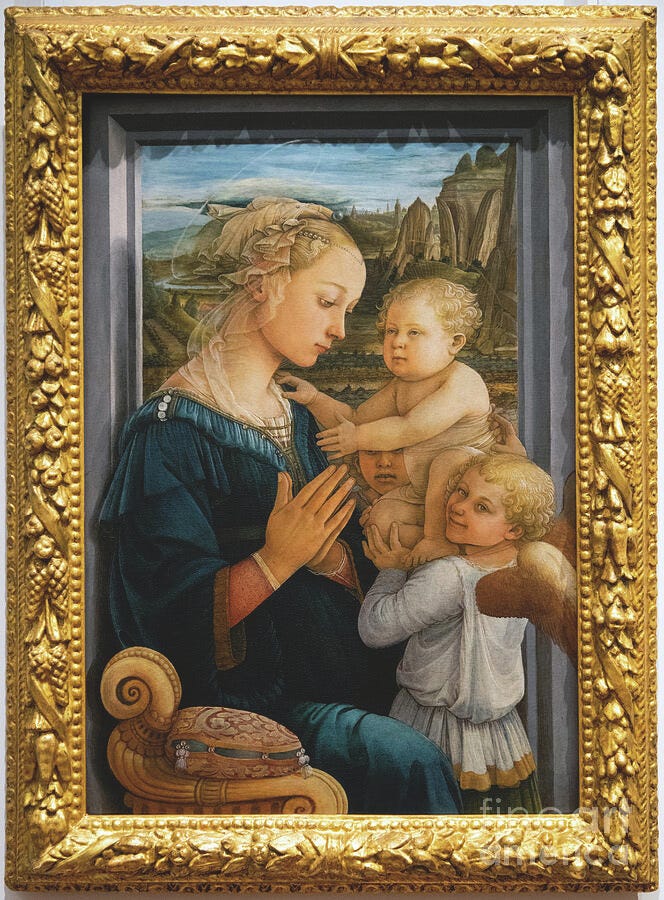
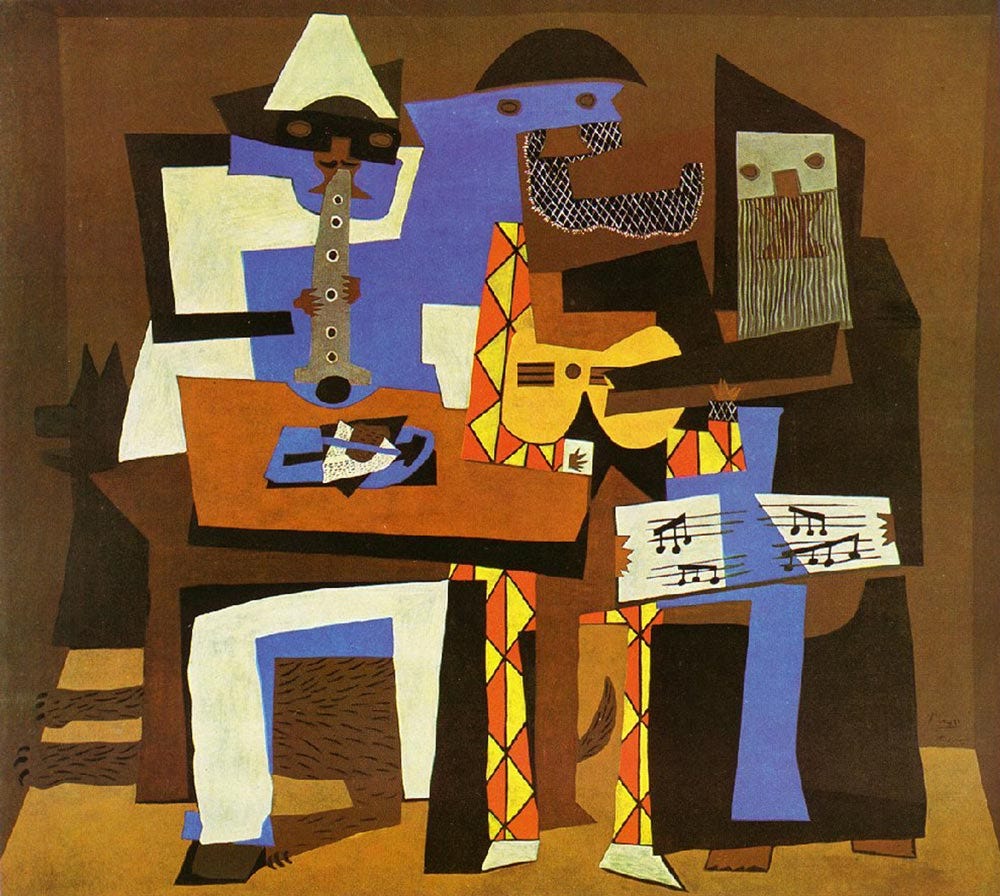
Now even this version is, I think, uncontroversial. The reason is that it is stated in terms of how valuable things are, and I presume we must mean by that some objective notion. For instance, when Cohen considers the case in which o is a panel by the 15th century Italian painter Filippo Lippi and o’ is a painting by the 20th Spanish artist Pablo Picasso, he means to consider a case in which the latter has greater objective value than the former. But we must remember that we are not required to align our own subjective values with these objective values, even when we know these objective values. Or, perhaps better, we are not required to align our preferences with known objective values—so we are not required to prefer one thing to another even when we know the former is more valuable than the latter.
This is most easily seen in the case of people. It’s natural to think that all people are equally objectively valuable, and yet while I know this I have preferences that don’t align with it. I strictly prefer a situation in which my nephew wins his gymnastics tournament to those situations in which his opponents do; I strictly prefer a situation in which my friend is happy to a situation in which a stranger is equally happy; and so on.
But it is also true of artefacts: I know the reproduction of a rather shoddy French pastoral painting that hangs in hallway of my building is less valuable objectively speaking than a still-to-be-painted genuine painting by a better artist of a more interesting scene, but I value the former more than the latter—I’ve grown fond of it, it’s part of my connection to this building, and I have no comparable connection to the genuine painting yet to exist. And so, unsurprisingly, I would prefer the conservation of the shoddy reproduction and the non-existence of the superior genuine article to the destruction of the reproduction and the existence of the real thing.
And friendships and romantic relationships are often rather tragically like this. We assign a value to a friendship partly on the basis of its relevant features—this friend is funny, supportive, exciting to be around, and those features add value, but they’re also controlling, and this depletes value—but also partly because we value the person themself who is the friend. Now suppose we know that, were we to end this friendship with these particular features and this particular person, we’d very likely find a new friend who is also funny, supportive, exciting to be around, but who is not controlling at all. This situation is, it seems, objectively more valuable—it is simply a better friendship. And yet, because we value the person who is the friend over and above the qualities of the friendship we have with them, we prefer to conserve this friendship and not create the new friendship over destroying this friendship and creating the new friendship.
So I think the formulation of Cohen’s conservatism I gave above is uncontroversial. Sometimes we prefer to conserve o and prevent the existence of o’ than to destroy o and ensure the existence of o’, even when we recognise that, objectively speaking, o’ is more valuable than o. Reflecting on the examples I gave, this happens because we value not only the objectively valuable features of a family member or friend or artefact with which we are familiar. We value them partly because of their objectively valuable features, but partly because of our history of interactions with them, or the attention we’ve paid to aspects of them, or because they are related to parts of our life that are important to us, or because we have decided to love them.
To some extent, the justification of Cohen’s conservatism I’m putting forward here resembles what Jake Nebel calls attitudinal conservatism, which he attributes to Samuel Scheffler.3 But, at least as Nebel describes it in his paper, on Scheffler’s view, the preference for conserving o instead of replacing it with o’ should hold only when we don’t value o’ at all. As Nebel puts it:
Scheffler argues that valuing involves an attachment to what’s valued, that attachment requires acquaintance, and that we can only be acquainted with things that exist.
And yet such an extreme view is not required to justify Cohen’s conservatism, and I do not endorse it. I do value my nephew’s opponents winning the tournament. Athletic achievement is objectively valuable and I recognise that value and would value their achievement if it were to come about. I just value my nephew winning more, and that’s because he and his achievements hold greater value for me than his opponents and their achievements do. Similarly with the artwork in the hallway of my building. I do value the future artwork by the better artist. While I can’t look at it yet and come to form an attachment, knowing that it will have this and that feature that are objectively valuable and whose value I recognise, I assign it value. I just value the reproduction of the poorer work more, and that’s because of my acquaintance with it. And similarly also with the friendship. I do value the possible future friendship with the as-yet-unspecified person, but just not as much as the one I currently have. Valuing something does not require acquaintance with it; but acquaintance with something, over an extended period of time, can lead one to value that thing much more, in a way that outstrips the features of it that are objectively valuable. And when that happens, you might perfectly rationally prefer to conserve that thing rather than replace it with something you know to be more objectively valuable, and which you value, perhaps greatly, but not as greatly as the existing thing to which you are attached.
As an aside, I think it’s also possible to add this extra particular value—the value that goes beyond the objectively valuable features of a thing—even to things that do not exist yet and with which one has therefore not had any acquaintance. Think of someone who has just become pregnant, who adds this extra particular value to the person that will eventually come to exist as a result of the pregnancy. Think of the extra value I place on the future novel my friend is planning to write long before it exists. And I think it’s a virtue of the version of the attitudinal conservatism I’m describing that it explains why our conservative disposition is so much weaker in cases like this. Suppose another friend has been planning a major oil painting for many years, making sketches and studies, visiting locations to collect vivid details, talking about what they wish to achieve with it, how it will express a conviction they’ve found difficult to put into words. Unfortunately, they can’t afford a canvas large enough for their planned work, but by chance I own a painting on a large canvas that would fit the bill well. That painting is objectively valuable, and I value it for its objectively valuable features, but also I’ve owned it long enough to become fond of it and assign to it extra particular value in itself over and above those objectively valuable features. I’ve seen my friend’s sketches and their other work, and it’s very good indeed, and I assign great extra particular value to the future as-yet-unpainted work they’re building towards because they’re my friend and I’ve discussed this work with them over many years so that its conception is woven into the history of our friendship. In this case, it’s easy to imagine that I would prefer to allow them to use the oil painting I own as their canvas, thereby destroying the painting that currently exists on it, but bringing into existence this artwork that I already assign extra particular value.
It might seem puzzling that we are able to value o more than o’, even when o’ is more valuable than o, objectively speaking, and we know this. But I think there’s no real mystery here. To say that something is objectively valuable is to say that it has features we should recognise as valuable and assign value to it based on those features. But it is not to say that these are the only features to which we might assign value, nor that we must assign value to it only based on these features, rather than its place in our lives. To say that it is objectively valuable is like saying it is aesthetically valuable: it is just to talk of a subset of the considerations that might go into determining how much we value it; it does not attempt to be comprehensive.
Nebel raises some objections to Scheffler’s version of attitudinal conservatism. Some target the claim that valuing requires acquaintance, which I reject, and so they don’t affect my version of the view; but some don’t. So let’s have a look at the latter:
First, he complains that this account can’t explain why I should conserve something that you value but I don’t. But that’s easily dealt with, as Nebel sees. I should prevent you being harmed, if I can do so without excessive cost to myself, and conserving something you value prevents you being harmed to you, and so I should do it if I don’t thereby incur excessive cost.
Second, he complains attitudinal conservatism can’t explain why I should conserve something no-one values. As he writes:
We have reason to prevent the destruction of great works of art or ecosystems even if their value were unrecognised and unappreciated.
But we’ve got to be careful here. Whatever Scheffler’s view says, if the ecosystem is objectively valuable, and if I respond correctly to its valuable features, than I will value it. What is absent in this case is the extra particular value that I place on objects because of my acquaintance with them or because of their special place in my life: the extra value I place on my nephew’s achievements because he is my nephew, or the extra value I place on the print in the hallway because I have seen it so often and it connects to my life in this building. So it’s not the case that I don’t value this ecosystem at all. I do—just as much as its objectively valuable features demand, but no more. And so I should prevent its destruction if nothing comparable of value will be created in its wake. But the attitudinal conservative is indeed committed to saying that, if something more objectively valuable will be created by its destruction, then I should not conserve it. Perhaps even that is too weak for some, though of course it’s worth noting that attitudinal conservatism makes no claim to being comprehensive; there might well be other considerations that show we shouldn’t destroy the ecosystem in this case that have nothing to do with extra particular value. Indeed, we might well advert to Nebel’s own object-affecting conservatism to explain the wrongness of destroying the ecosystem in the case imagined—it is a thing whose goodness we should promote if we can, and it is good for the ecosystem to continue to exist.
Third, Nebel describes the following case. Suppose o’ is objectively more valuable than o; at time t, you value o more than o’; but were o to be destroyed and were o’ come into existence at the very slightly later time t’, you would come to value o’ more than o; and, in some aggregate sense, you are better off overall with o up to t’ and then o’ thereafter than with o throughout. Then, Nebel says, if I could prevent the destruction of o at time t’, I should, even though that prevents the creation of o’ at t’, and having o followed by o’ is better for you overall than having o throughout.
But we can recover this assessment if we think that what I should do at time t is not what is best for your overall, but what you at time t would now prefer me to do—and various forms of anti-paternalism will say exactly that. After all, at t and t’, when o exists but o’ doesn’t, you value o more and so prefer o throughout to o followed by o’. And so that’s what I should secure for you by preventing the destruction of o at t’.
Of course, if I were to allow o to be destroyed and thereby allow o’ to exist, you would come to be someone later who is grateful for what I did, since you now value o’ more. But the gratitude of hypothetical future people does not determine how we should behave—even in the case of a person choosing for themselves, as Elizabeth Harman points out, ‘I’ll be glad I did it’ reasoning leads us astray. I should choose for you at a time in the way you would choose for yourself at that very time.4
So I think a version of attitudinal conservatism that is a little different from Scheffler’s can recover Cohen’s version of conservatism, and it is more complete than Nebel imagines. This does not impugn his object-affecting conservatism, of course—there will likely be many different reasons for conserving something that exists, and it is surely the case that our reasons for conserving persons and friendships and non-human animals and ecosystems are different from our reasons for conserving artefacts and social institutions. But I think it shows that the attitudinal version is more powerful than it seems.
So Cohen’s conservatism follows from reasonably uncontroversial premises. But by revealing its basis, we see that it is not really conservatism at all, unless it is conservative to come to value one thing more than another that is equally objectively valuable just because one has greater connection to it or has had the opportunity to interact with it and appreciate its valuable features more. Perhaps this is what Cohen means when he says that everyone has something of the conservative disposition; everyone recognises the truth in conservatism that he has identified.
Perhaps you set your preferences in line with John Quiggin’s rank dependent expected utility theory, Lara Buchak’s subjective version, or the risk-sensitive decision theory proposed by Soo Hong Chew and recently given a philosophical motivation by Chris Bottomley and Timothy Luke Williamson.
I’m grateful to Alex Hepburn for many discussions of the nature of reasons that have clarified for me what people mean when they talk about them in philosophy.
In fact, I think things are a little more complicated than this, since I think you should take into account future preferences of selves who might come to exist as a result of your decision when you’re deciding, but that doesn’t end up affecting the point here.
I am very sympathetic to the intuitions that you canvas from Cohen's "Rescuing Conservatism". But I find the theoretical framework that you are presupposing here to be somewhat dubious and obscure....
1. In your statement of what you call "Cohen's conservatism", you write as though the fundamental bearers of value are things like paintings - things of the kind that can be "destroyed" or "replaced". But for reasons that are most clearly explained by Stephen Finlay ("Confusion of Tongues", Chap. 2), I am convinced that the fundamental bearers of value are really *states of affairs* (or broadly proposition-like entities). In my judgment, most of the intuitions that you canvas here can be explained by the point that the state of affairs of the relevant item's being conserved - and thereby lasting for a longer period of time - is intrinsically better in a certain respect than the state of affairs of that item's being destroyed. E.g. it is in a certain way better for two friends to have a lifelong friendship rather than for them to drift apart and lose interest in each other, etc.
2. I find the idea of "subjective values" to be quite mysterious (as opposed to beliefs about or expectations of objective values). So, I prefer to appeal to a larger inventory of objective values instead. The attitudes constitutive of being a loyal friend are intrinsically good attitudes. Arguably, so too are the attitudes of treasuring prized possessions, becoming deeply familiar with and appreciative of a particular unique environment, etc. The point is that we have reason to have such intrinsically good attitudes, and - at least with many types of attitudes - what makes these attitudes intrinsically good is not just the agent-neutral value of their objects, but some relation in which the agent stands to those objects.
The crucial test for self-described Oakeshottian conservatives is their attitude trade unions. Unions are familar (more so than the modern form of the corporation), tried over two hundred years, factual, actual and so on. Moreover, they are the epitome of solidaristic community as opposed to both individual self-seeking and the rationale rule of experts.
The great majority of self-described conservatives fail this test - I've never been able to pin down Oakeshott himself.